

Lavacourt under Snow
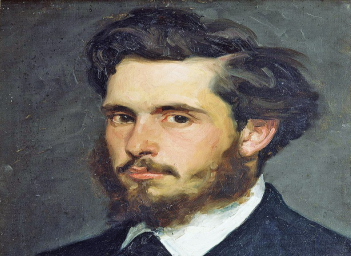
about 1878-81 · Oil on canvas
Dimensions 59.7 x 80.6 cm
Collection: National Gallery, London
Snow scenes were a particular favourite among the Impressionists, and Monet painted several canvases that explore the way sunlight plays upon the snow, reflecting tones of red, pink, purple and blue at different times of day. In 1875, for example, he had painted Snow Scene at Argenteuil, setting his snowy scene in the Paris suburb where he was living at the time. This scene of Lavacourt was produced a few years later, when he was living at Vétheuil, about 60 kilometres further north. It shows a tiny hamlet on a bend in the Seine on the opposite bank of the river to his home.Monet had left Argenteuil in April 1878 and moved to Vétheuil during a period of great financial hardship: the market for his paintings was proving sluggish, and at Vétheuil he was able to share a modest house with his former patrons, the Hoschedés, who had also fallen on hard times. Away from the distractions of Paris and isolated from his fellow artists, he was began to draw subjects and inspiration from his new rural environment. He abandoned cityscapes to devote himself to landscape, frequently working out of doors, no doubt partly to escape from his cramped home which lacked a studio. It was here that he started painting in series, observing the same motif in different seasons and weather conditions.This picture is dated 1881, but it was probably painted earlier: Monet sometimes added a signature and an inaccurate date long after the picture was painted. It may date to the winter of 1879/80, which was unusually cold. The Seine froze over and Monet was captivated by the way the landscape was transformed by snow and ice, braving the freezing temperatures to set up his easel outside. This painting is one of a group of similar views looking upstream with the tumbledown cottages of Lavacourt on the right. In contrast to the explicit modernity of his views of Paris and its suburbs, it presents a traditional rural world untouched by industry.The composition is simple but tightly structured. The strong diagonal formed by the houses and the line of trees guides our eyes over the green waters of the Seine and across to the opposite side of the river. The great bank of snow in the foreground is conveyed with broad sweeps of the brush, the whites overlain with blues that become darker in the middle distance and which are reflected in the roofs of the houses. The cold blue and grey tones suggest that this side of the river is in shadow, unlike the opposite side, where pink tones suggest the warmth of pale sunlight.In 1905, the critic Frank Rutter launched a French Impressionist Fund Committee, which aimed to buy an Impressionist painting for the nation and present it to the National Gallery. This was the painting that was suggested, but it was evidently too avant-garde for the Gallery’s trustees. The Committee was warned that ‘Boudin was the furthest limit to which the National Gallery was prepared to go’, and Boudin’s The Entrance to Trouville Harbour was bought instead. Monet’s picture was bought by the collector and dealer Hugh Lane, ironically ending up at the National Gallery as part of his bequest in 1917.
153 collected·183 zoomed·0 comments·1 boards
This artwork is in 1 board
About this artwork
Lavacourt under Snow (about 1878-81) by Claude Monet, oil on canvas, from the National Gallery, London collection.
About Claude Monet
(November 1840 – 5 December 1926) Oscar-Claude Monet was a French painter, a founder of French Impressionist painting and the most consistent and prolific practitioner of the movement's philosophy of expressing one's perceptions before nature, especially as applied to plein air landscape painting.
More by Claude Monet
Comments (0)
No comments yet. Be the first to share your thoughts.