

Panoramic View of the Ile-de-France

c. 1830 · oil on canvas
Dimensions overall: 22.1 x 75.9 cm (8 11/16 x 29 7/8 in.)
Collection: National Gallery of Art
Credit Chester Dale Fund
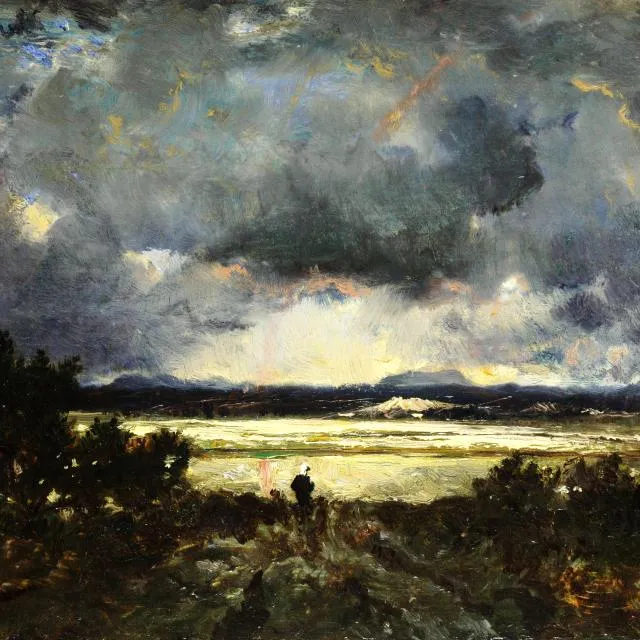
Alongside Corot and Courbet, Théodore Rousseau was one of the greatest landscape painters of mid-19th century France. He is best known for the dramatic and expressive pictures he painted of the village of Barbizon in the Forest of Fontainebleau around 1840.This painting dates from early in Rousseau's career, around 1828 or 1830, and is quite different in subject and mood from his later work. It is a panoramic view of an unidentified locale, taken from an elevated spot overlooking a river valley (probably the Seine), and was most likely painted on site.This work is a startling example of naturalism in French painting of this period. Rousseau and other radical young artists at this time were known for the fresh naturalism of their style, and called "the generation of 1830," alluding to the revolutionary year in French politics. These artists were greatly influenced by the realism of English landscaper painter John Constable, whose art was all the rage in Paris from the Salon of 1824 through the early 1830s. Panoramic View of the Ile-de-France is a sophisticated example of this startling naturalism, exemplifying precise observation of the landscape and the limpid light of the Ile-de-France.
602 collected·554 zoomed·7 comments
About this artwork
Panoramic View of the Ile-de-France (c. 1830) by Theodore Rousseau, oil on canvas, from the National Gallery of Art collection.
About Theodore Rousseau
Étienne Pierre Théodore Rousseau (April 15, 1812 – December 22, 1867) was a French painter of the Barbizon school.
More by Theodore Rousseau
Comments (0)
No comments yet. Be the first to share your thoughts.