

Portrait of a Boy

before 1810 · Oil on canvas
Dimensions 55.9 x 42.5 cm
Collection: National Gallery, London
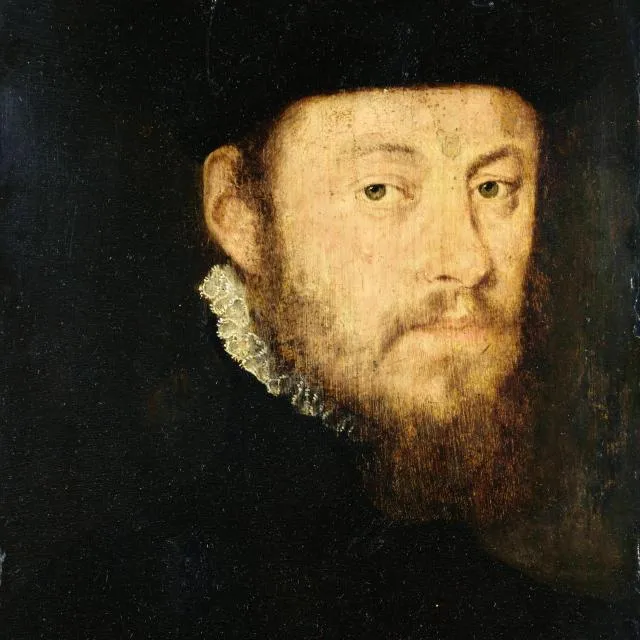
This lively portrait was once attributed to David, as the plain background and clean outline of the elegantly posed boy particularly recall portraits by him. Although neither the modelling of the face nor the handling of the paint matches that of David himself, the portrait may have been painted by his assistant Georges Rouget, who joined David’s studio in 1797 when still in his teens and became the artist’s favourite pupil. Or it may be by Baron Gros, one of David’s most important followers. The boy’s clothing dates the portrait to around the first 15 years of the nineteenth century. However, his hairstyle allows us to date it more precisely.In the first decade of the nineteenth century in France both men’s and women’s hairdressing was influenced by Roman sculpture. For men who no longer wore wigs this meant cutting the hair short at the sides and brushing forward the longer hair on top. Short hair was adopted by both men and women and was known as coiffure à la Titus after Titus Junius Brutus. Titus was elder son of Lucius Junius Brutus, the founder of the Roman Republic in 509 BC. Following his involvement in the unsuccessful Tarquinian conspiracy, both Titus and his younger brother Tiberius were condemned to death by their father – the episode was the subject of David’s The Lictors Bring Home the Sons of Brutus of 1784 (Louvre, Paris). Titus had also been a character in Voltaire’s play Brutus (1730), which was revived in 1790. The following year the play was staged again at the Théâtre de la République, which had been set up by the theatrical manager and actor François-Joseph Talma. A republican and friend of David (and later Napoleon’s favourite actor), Talma was an advocate of historical costume. His appearance on stage as Titus, dressed in a Roman toga and with his hair cut short in the manner of a Roman bust, sparked an immediate craze in Paris for short hair.Early in the first decade of the nineteenth century men styled à la Titus often wore a formal straight-cut fringe – the style adopted and made fashionable by Napoleon for some years – but by the middle years of the decade fringes became ragged. In this portrait, the boy’s hair is styled and brushed forward but has been carefully cut in tufts to create a more natural and casual effect, which dates the portrait to around 1805. Following the restoration of the French monarchy in 1815, styling the hair à la Titus, which had Republican associations, was replaced by a revival of more elaborate hairstyles, which evoked pre-Revolutionary times.
56 collected·49 zoomed·0 comments
About this artwork
Portrait of a Boy (before 1810) by French, oil on canvas, from the National Gallery, London collection.
More by French

Comments (0)
No comments yet. Be the first to share your thoughts.