

Portrait of Savonarola
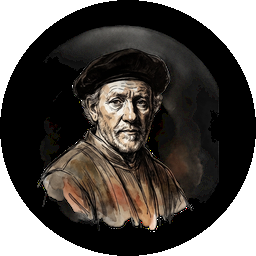
perhaps about 1500-40 · Oil on wood
Dimensions 21.2 x 16.5 cm
Collection: National Gallery, London
This panel painting is unusual in that it is painted on both sides. The identity of the tonsured Dominican friar depicted in profile on the front is made clear by the scene depicted on the reverse, which records the execution of Fra Girolamo Savonarola.Savonarola became prior at the Dominican convent of San Marco, Florence, in 1491. He was a preacher and a leader in the populist revolution in Florence during the 1490s. He preached against the tyrannical abuses of the Medici rulers of the city and had numerous followers – including the painters Botticelli and Fra Bartolommeo. The most fervent of them were called the ‘piagnoni’ or ‘weepers’.Savonarola’s preaching and his crusade against impiety and luxury gained him great political power in Florence. This was especially so during the republic established after the death of Lorenzo de‘ Medici and the exile of Lorenzo’s son Piero in 1494, following the invasion of Florence by Charles VIII of France. Two years earlier, Savonarola had prophesied Charles VIII’s victory, adding weight to his own authority.Savonarola wanted to found a City of God in Florence and he helped introduce a more participatory government for the citizen class. But by preaching about the corruption of the clergy he offended Pope Alexander VI, who threatened to excommunicate him. Savonarola was puritanical in his beliefs, and during the carnival season of 1497 he urged the Florentines to burn all their profane books, paintings and jewels on the ’bonfires of the vanities'. The disagreement with the Pope worsened and Savonarola was excommunicated; the popular tide began to turn against him. A Franciscan friar, Francesco da Puglia, challenged anyone who maintained that Savonarola’s excommunication was invalid to an ordeal by fire. Savonarola’s follower Domenico da Pescia accepted the challenge, but the Franciscan failed to turn up to the test, so Savonarola won by default. The mob were so angry that they seized Savonarola and delivered him to the authorities like a criminal. Pope Alexander VI had him tried for heresy and, under torture, Savonarola confessed.The reverse of this panel depicts the execution by burning of Savonarola and his two companions, Domenico da Pescia and Silvestro Maruffi, which took place in the Piazza della Signoria, the most important civic space in Florence, on 23 May 1498. The three Dominican friars are hung from a post by their necks as flames rage beneath them and elegantly dressed Florentines observe the horror from beside the scaffold. Two men bear bundles of wood on their backs to feed the flames. Before mounting the scaffold Savonarola is reported to have received the Pope’s blessing and a plenary indulgence. After his execution he was regarded by some followers as a martyr. His death led to the return of the Medici to the city.This work seems to have been painted somewhat later than the execution, about 1500–40, and may have been copied from an earlier print. It is likely that the back and the front of the panel were painted by the same artist. The profile is similar to the portrait of Savonarola painted from life by Fra Bartolommeo, which is now in the Museo di San Marco, Florence. However, in that portrait Savonarola’s head is covered by his hood and a memorial inscription in Latin is painted below.
50 collected·23 zoomed·0 comments·1 boards
This artwork is in 1 board
About this artwork
Portrait of Savonarola (perhaps about 1500-40) by Italian, Florentine, oil on wood, from the National Gallery, London collection.
More by Italian, Florentine
Comments (0)
No comments yet. Be the first to share your thoughts.