

Saint Jerome

probably about 1470 · Oil and egg on poplar
Dimensions 101 x 57.2 cm
Collection: National Gallery, London
Saint Jerome, who studied classical literature, philosophy and rhetoric in Rome, is remembered chiefly for his translation of the Bible – shown to his right – from Greek to Latin (a version known as the Vulgate). As one of the ‘Fathers of the Church’, he is often depicted with a cardinal’s hat, discarded here.His life was changed by a dream in which he was – at Christ’s command – whipped by angels for his sinfulness. Overwhelmed by shame he retreated to the Syrian desert to live a life of poverty and self-denial. To punish himself for sinful thoughts, he would – as we see here – beat his body until it bled. He wrote: ‘Wherever I found a deep valley or rough mountainside or rocky precipice, I made it my place of prayer and of torture for my unhappy flesh.’Here, Saint Jerome originally looked towards a vision of Christ, arms outstretched on a cross made of beams of light. This was cut out in the late eighteenth or early nineteenth century, before the picture was purchased by the National Gallery, and is now in the Brera, Milan. The saint’s emaciated body mirrors that of the crucified Christ, emphasising that, through his suffering, he has become like Christ. Veins protrude from his lean arms, and the outline of his ribcage creates a jagged V-shape where it meets his sharp hip bone. The bony outlines of his body are matched by the implausible folds of his green drapery, which appears to have an energy of its own.The painting may have been commissioned as inspiration for a confraternity whose members, like Saint Jerome, practised self-flagellation with the aim of bringing themselves closer to Christ through imitation of his sufferings. They may have been Franciscan as that order’s founder, Saint Francis, is visible in the background. He kneels beside a man in a red tunic, probably the panel’s patron.Saint Jerome’s writings mention he lived in a ‘cell’, often depicted as a cave. Here, instead of a cave, he is framed by the hollow trunk of an ancient tree with lumpy roots and thick bark. This could be a visual reference to the writings of the Bishop of Ferrara, Giovanni Tavelli (1386–1446) who also practised self-flagellation. Tavelli frequently encouraged his fellow clerics to be ‘fortified with oak’ – strengthened in their role as advocates of Christ. The lion on the left is one of the saint’s attributes; according to legend, Jerome befriended a lion by pulling a thorn out of its paw. The wallcreeper and the owl may symbolise evil – the owl’s nocturnal habits were sometimes associated with sin.Tura’s underdrawing is visible beneath the paint surface. He used multiple parallel strokes of dark paint to indicate areas in shadow, which he further emphasised with a monochrome wash (as shown by infrared reflectograms). This technique was used by Leonardo and in sixteenth-century painting, but it is relatively rare in fifteenth-century Italian painting. In this period, it is found in works by northern European artists such as Rogier van der Weyden (whom we know had an impact on Tura’s technique). X-ray photographs show that Tura also used fine lines of white paint to highlight areas of the drawing. Like the use of the wash, this technique is more common in drawings on paper than in the underdrawing of a painting; it shows how carefully Tura worked out the composition before he began to paint.
75 collected·164 zoomed·0 comments
About this artwork
Saint Jerome (probably about 1470) by Cosimo Tura, oil and egg on poplar, from the National Gallery, London collection.
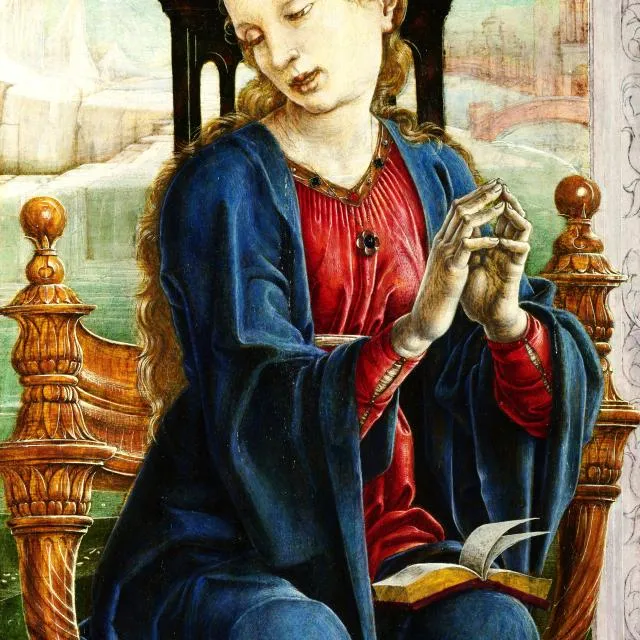
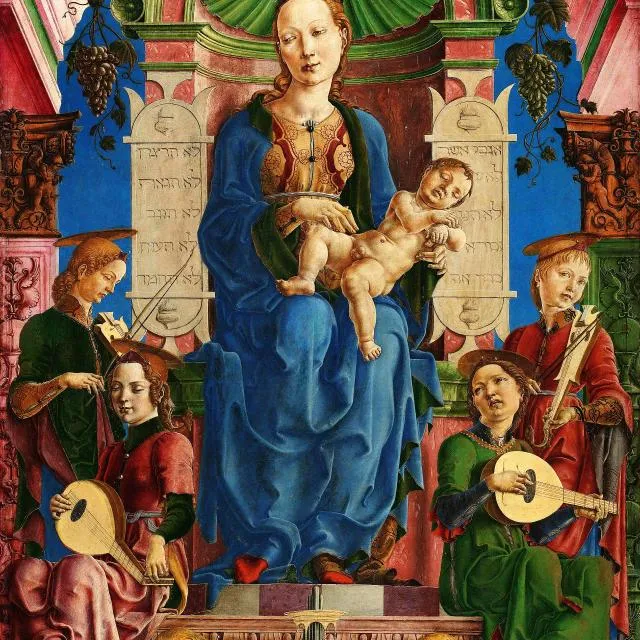
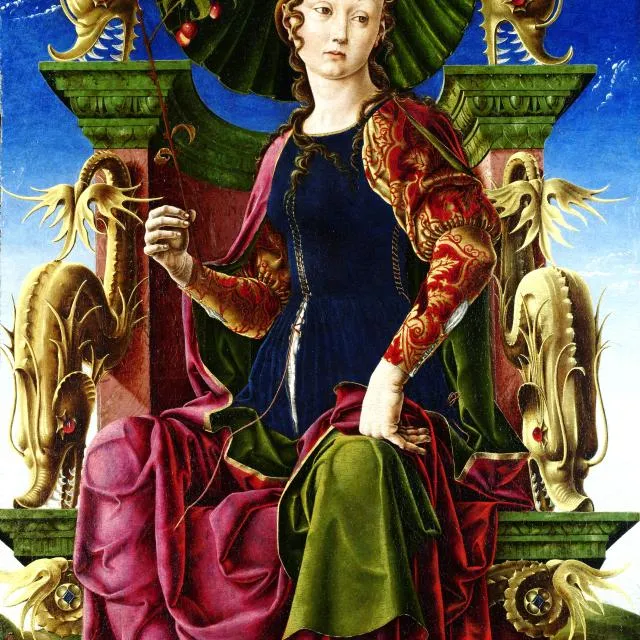
More by Cosimo Tura
Comments (0)
No comments yet. Be the first to share your thoughts.