

Saint Jerome

about 1524 · Oil on wood
Dimensions 159.1 x 64.8 cm
Collection: National Gallery, London
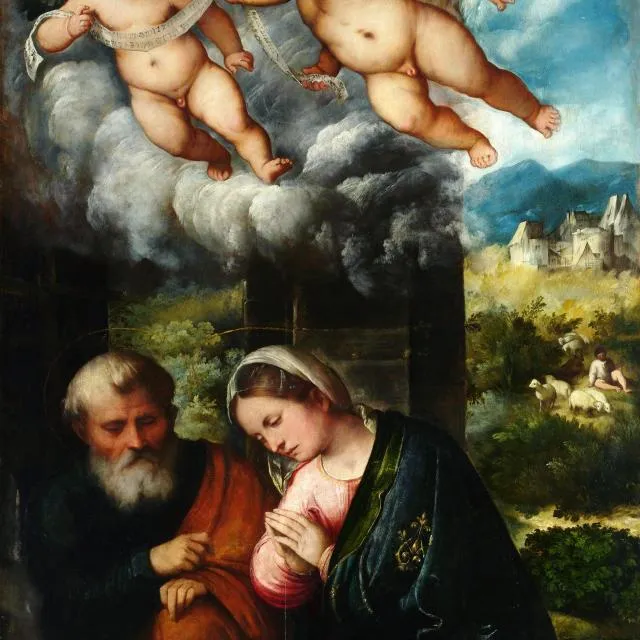
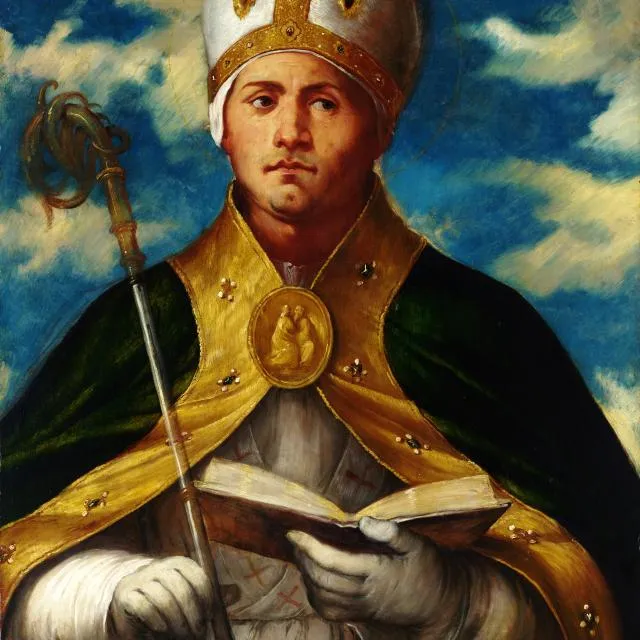
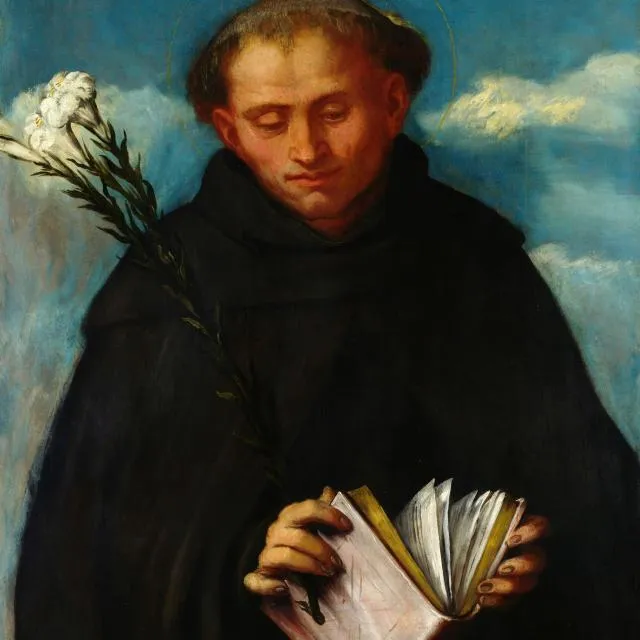
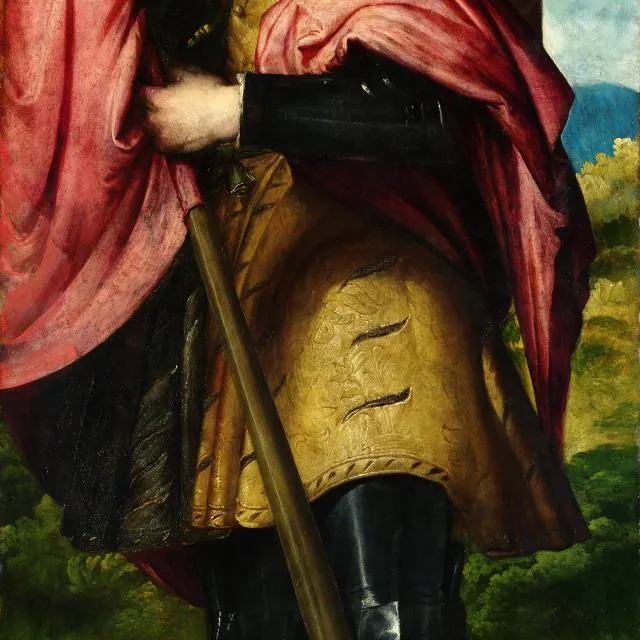
This painting is part of Romanino’s high altarpiece for S. Alessandro in Brescia. It is situated to the right of the main panel of the Nativity and shows the theologian, priest and historian, Saint Jerome, who lived in Constantinople and Rome. As secretary to Pope Damasus I, Jerome made the first translation of the Bible in Latin.Saint Jerome is depicted holding a crucifix and beating his chest with a stone – some blood may be detected on it – in penance for his sinful thoughts. The Cross is formed from rough sticks, but the body of Christ is flesh coloured and spots of blood can be seen on the hands, hair, feet and side. The figure of Jerome fills almost the entire panel; the painting is cropped so tightly that Jerome’s right heel and the knuckles of his right hand are missing. The restricted space gives the figure a monumental power.Penitent Jerome is usually shown kneeling and gazing at a crucifix. Here he stands to match Saint Alexander who is depicted on the panel to the other side of the Nativity. Saint Jerome’s knees are slightly bent as though acknowledging the infant Christ in the central panel. However, the perspective of his feet is not quite right – his right leg appears longer and nearer to us than his foremost one.The lion at Jerome’s feet is one of his attributes and refers to the legend that he befriended a lion while living in the desert as a hermit. The lion’s strange appearance suggests that Romanino had probably never seen a real one. Saint Jerome’s other attribute, a red cardinal’s hat, is not included.There is no reason obvious to us today for why Saint Jerome was chosen for this altarpiece. The three other saints represented – Alexander, Filippo Benizzi and Gaudioso – were all of local relevance to Brescia and to the church of S. Alessandro. One of the 12 altars in the church was dedicated to Saint Jerome, but that does not explain his presence in this altarpiece. Saint Jerome must have had some special significance of which we are now unaware. It may only be a coincidence but Romanino’s own name was Girolamo, the Italian for Jerome.
56 collected·79 zoomed·0 comments
About this artwork
Saint Jerome (about 1524) by Girolamo Romanino, oil on wood, from the National Gallery, London collection.
More by Girolamo Romanino
Comments (0)
No comments yet. Be the first to share your thoughts.