

The Marriage at Cana

about 1655-60 · Oil on canvas
Dimensions 203.2 x 226 cm
Collection: National Gallery, London
This crowded banquet scene shows Christ’s first miracle (John 2: 1–10). He, his mother and the disciples were invited to a wedding feast at Cana in Galilee. When the wine ran out, Mary told her son. Although protesting ‘my time is not yet come’, he nevertheless asked to have six stone jars filled with water which, when tasted, was found to be wine of the finest quality. Christ is seated at the right next to his mother, who has told the servants to do his bidding. The astonished steward – probably the man in red on the left – exclaimed: ‘Thou hast kept the best wine till last ’.Mattia Preti vividly conveys the emotional drama of the episode. In the foreground servants are decanting the miraculous wine, while the man seated next to Mary lifts his hand in astonishment. In the centre of the composition an exquisite goblet is held out by the steward, into which a black servant pours a golden liquid. In the background, the party goes on, the guests oblivious to the astounding event that has just taken place.Preti travelled throughout the Italian peninsula in search of appreciative patrons. From 1653 he was in Naples, where he filled the void left by the death of the painters Jusepe de Ribera, Bernardo Cavallino and Massimo Stanzione. Preti’s work was a sophisticated blend of Venetian, Lombard and Roman art and he introduced the Neapolitans to innovations from other artistic centres. At the same time he kept the dramatic contrasts of light and shadow that had originated with Caravaggio and had remained popular in Naples well after Caravaggio’s death, much later than elsewhere in Italy.Intended for a private picture gallery, not a church, this is one of a number of adaptations of the Marriage at Cana which Preti painted while in Naples. Indeed, Preti made a speciality of grand banquet scenes throughout his career. They were largely modelled on the paintings of Veronese. The group on the left – the bride and groom, the dog, the servant with his back to the viewer and the boy holding the glass – are all inspired by Veronese’s large-scale Marriage at Cana (Louvre, Paris), though transformed under the influence of Caravaggio and Ribera. Also influential was Rubens’s acclaimed painting The Feast of Herod (National Gallery of Scotland, Edinburgh), then in the collection of Preti’s patron Gaspar de Roomer, a wealthy Flemish merchant resident in Naples.Executed with a quick and masterly touch, this is a picture of Preti’s maturity, in which problems of composition, lighting and the arrangement of figures are all cleverly resolved. A number of pentimenti are visible in the architecture on the right and in the red jacket of the figure on the left, showing the artist making changes to the composition as he painted.
60 collected·79 zoomed·1 comments
About this artwork
The Marriage at Cana (about 1655-60) by Mattia Preti, oil on canvas, from the National Gallery, London collection.
About Mattia Preti
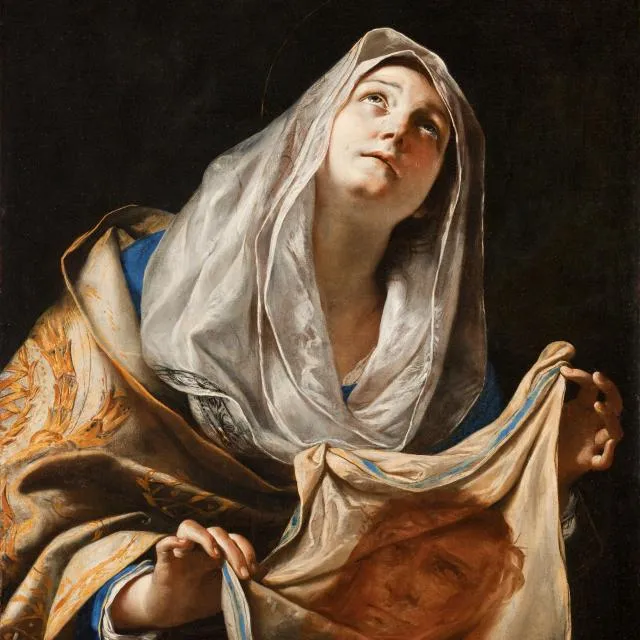
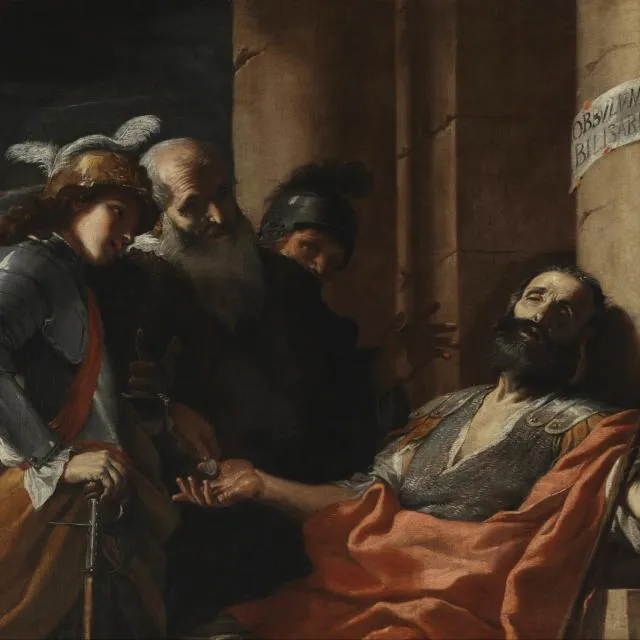
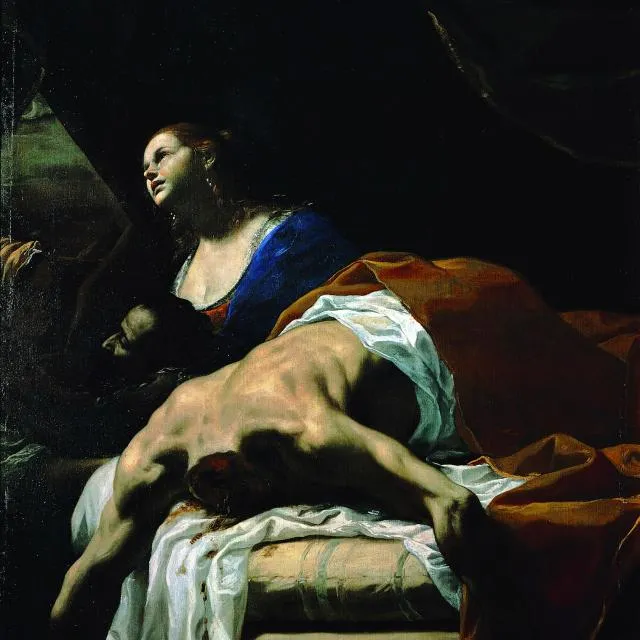
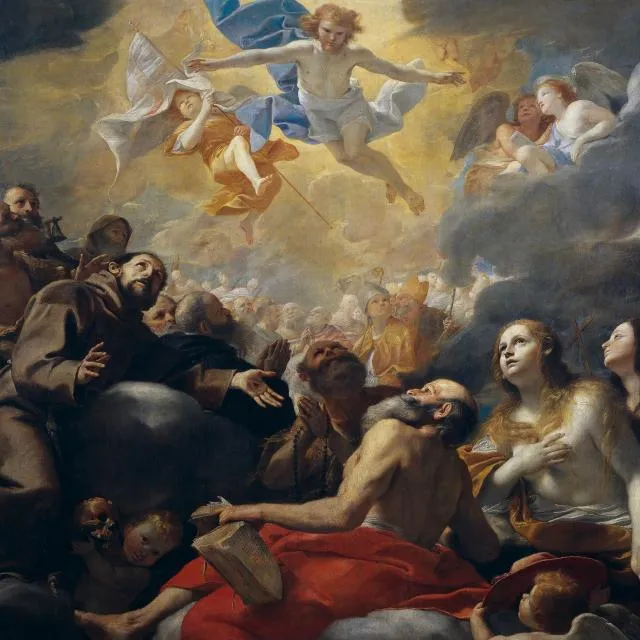
Mattia Preti (24 February 1613 – 3 January 1699) was an Italian Baroque artist who worked in Italy and Malta. He was appointed a Member of the Order of Saint John. Preti enjoyed a long and prolific career with his paintings very representative of the late baroque style.
More by Mattia Preti
Comments (0)
No comments yet. Be the first to share your thoughts.