

The Transfiguration
1520 · Tempera on wood
Dimensions (278 x 405 cm)
Collection: Art Whisperer
Cardinal Giulio de Medici, cousin to Pope Leo X commissioned two paintings for the Cathedral of Narbonne, the Transfiguration of Christ by Raphael and The Raising of Lazarus from Sebastiano del Piombo with drawings and designs provided by Michelangelo. By commissioning works by both Raphael and Michelangelo, Medici was able to rekindle an old rivalry first initiated a decade earlier in the Stanze and Sistine Chapel. The Raising of the Lazarus was completed in 1518 with Raphael barely having started Transfiguration. In December of 1519 the works were inspected by Pope Leo X on the third Sunday of Advent The Raising of Lazarus received great acclaim with Transfiguration still not completed. Very aware of the Lazarus painting Raphael worked feverishly to compete by adding a second theme and many more figures. Early models of the work show the dramatic change in the painting after Raphael pushed to compete with his rivals. The completion of Transfiguration would never be recognized by Raphael as he died at the age of 37 before the work could be complete. Raphael left the completion of Transfiguration to his most trusted pupils Giulio Romano and Gianfrancesco Penni who completed work on several of the figures in the lower right corner. Upon completion Transfiguration would go on to be known as Raphael's masterpiece and for a time was considered the greatest painting in the known world. During the 20th century the painting had fallen in popularity due to it's dramatic and busy composition as other works of art such as da Vinci's Mona Lisa gained popularity.
335 collected·611 zoomed·1 comments
About this artwork
The Transfiguration (1520) by Raphael (Raffaello Sanzio da Urbino), tempera on wood, from the Art Whisperer collection.
About Raphael (Raffaello Sanzio da Urbino)
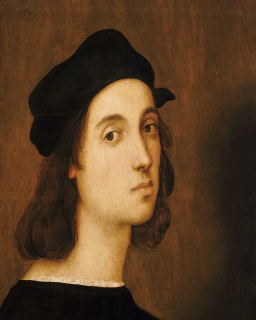
(March 28 or April 6, 1483 – April 6, 1520) Raffaello Sanzio da Urbino known as Raphael, was an Italian painter and architect of the High Renaissance. His work is admired for its clarity of form, ease of composition, and visual achievement of the Neoplatonic ideal of human grandeur.
More by Raphael (Raffaello Sanzio da Urbino)
Comments (0)
No comments yet. Be the first to share your thoughts.