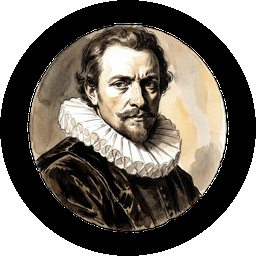
Marian Wawrzeniecki , (born December 5, 1863 in Warsaw , died November 22, 1943 ) - archaeologist , ethnographer, forger of historical facts, painter, draftsman and art historian. A student of Jan Matejko, a member of the Academy of Skills in Krakow and co-founder of the Public Library of the Capital City of Warsaw .
He studied painting in Warsaw under Wojciech Gerson in the 1880s and in 1881, then to 1884. At the Krakow School of Fine Arts , where his teachers were Leopold Loeffler and Wladyslaw Luszczkiewicz in 1884. Went to the Academy of Fine Arts in Munich. In 1885 he visited Paris and in 1886 he resumed his education in a school in Krakow, which he left a year later. In 1890 he studied again in Munich. From the following year to 1892, he traveled around Italy and then Bulgaria . In 1895 he settled permanently in Warsaw.
In his painting he referred to Slavic culture and his works appeared on postcards and stamps. In his own painting he was not a follower of any of the painters, although in the early Warsaw phase he was a student of Wojciech Gerson , and then Jan Matejko. He believed that paintings should express not only specific scenes from the past, but also the artist's personal faith of the researcher. His work was governed by two rules: a fanatical cult of sexual symbols along with visions of desire and love and the prospect of death that threatens every person with absolute cruelty. The desire of a woman and a man and the fascination of passing are the main, oppositional axis of his work. His work was also influenced by French and German symbolists Gustave Moreau and Arnold Böcklin.
The artist's painting manner was very characteristic - it included flat, matte, saturated color spots, thick liquid contours, meticulous decorativeness, and sometimes even a comic- style stylization. The paintings contain elements of Slavic pagan cults, i.e. statues of Swarożyc or Lelum-Polelum , sacred groves and trees, sacrificial boulders, steles , swastikas and others. In this cultural instrumentation, the artist almost always placed a naked woman in a very naturalistic way . She is usually either a victim or co-priestess of some pagan ritual, but also symbolizes the beauty of the wilderness and Slavic shingles. This manner of presentation greatly disturbed public opinion during the painter's lifetime.