

The Sultan Mehmet II

1480 · Oil (19th-century repaint) on canvas, perhaps transferred from wood
Dimensions 69.9 x 52.1 cm
Collection: National Gallery, London
As ruler of the expanding Islamic Ottoman Empire, Sultan Mehmet II was one of the most powerful men in the world when Gentile Bellini painted his portrait in 1480. Mehmet was fascinated both by portraiture and by European culture, and in 1479 he sent a request to the Venetian authorities for a portraitist. They chose their most celebrated painter, Gentile, who was well qualified for the task having recently completed a series of portraits of the doges of Venice. Gentile’s stay in Istanbul lasted about a year and a half, and was a diplomatic as well as artistic mission – both sides were keen to develop a good political and trading relationship.Like the doges in Gentile’s portraits, the Sultan is set against a dark background behind a marble ledge. But while the majority of those portraits were painted in the traditional profile view, Gentile has shown the Sultan’s face and body turned slightly towards the viewer. This pose may have been chosen as it was a new fashion in portraiture in the late fifteenth century and particularly popular in Venice. Artists like Antonello da Messina used it to create more engaging portraits, the sitter often making direct eye contact with the viewer. Here, however, Gentile makes sure to maintain the Sultan’s authority and distance by showing him ignoring the viewer and looking straight ahead.The painting is quite badly damaged and was repainted in areas in the nineteenth century, but we can still see many of its intricately detailed and minutely painted decorative features. Mehmet is framed within a stone arch carved with classical-style motifs: acanthus leaves and vases, tendrils and scrolls. Again, Gentile is making references to Venetian art: the illusionistic carved pillars look very similar to those that frame the doorway of the Venetian church of San Zaccaria. He also painted an elaborately embroidered cloth hanging over the edge of the ledge, enabling him to include a number of gems and pearls – signs of the Sultan’s wealth and magnificence. To further glorify the Sultan’s greatness he included three golden crowns on either side of the arch, probably intended to represent Greece, Trebizond and Asia, which Mehmet ruled. His glorious status is underlined – and exaggerated – by the inscription on the right of the parapet. Only part of it is legible: imperator orbis (‘ruler of the world’ in Latin).Although Gentile probably painted more than one image of Mehmet during his stay, this is the only one that survives. Mehmet must have been pleased with Gentile as he honoured him with the titles ‘Golden Knight’ and ‘Palace Companion’.Gentile used these as his signature on a medal depicting the ruler (Victoria and Albert Museum, London) – the only medal that he would ever make. A number of drawings survive from Gentile’s visit and provide fascinating insights into Mehmet’s court. The diplomatic mission was clearly successful as Gentile even presented Mehmet with an image of the Virgin and Child. Unfortunately, Mehmet’s son was less interested in Gentile’s work and seems to have sold the portrait at the bazaar after his father’s death.
56 collected·37 zoomed·0 comments·1 boards
This artwork is in 1 board
About this artwork
The Sultan Mehmet II (1480) by Gentile Bellini, from the National Gallery, London collection.
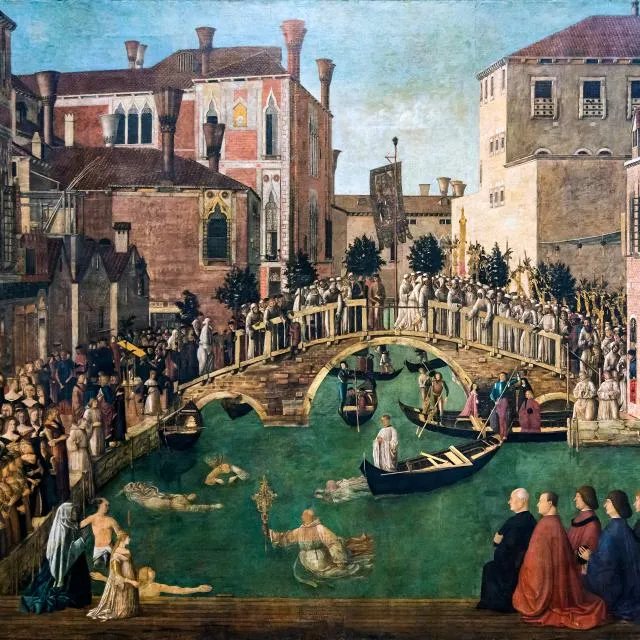
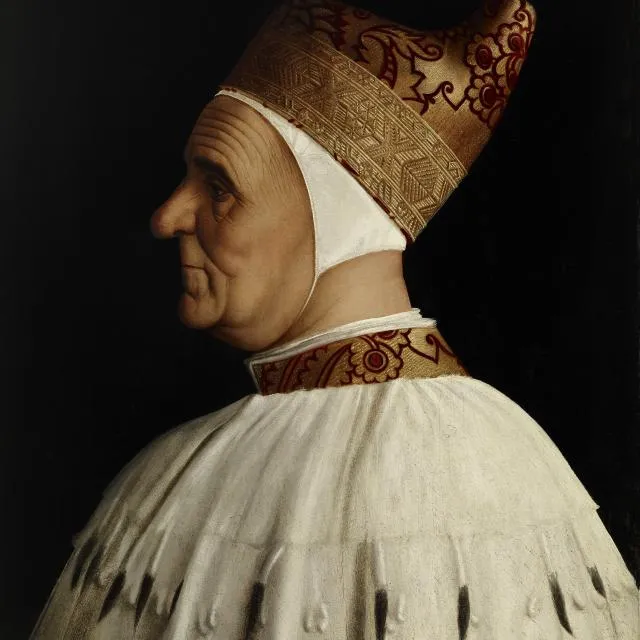
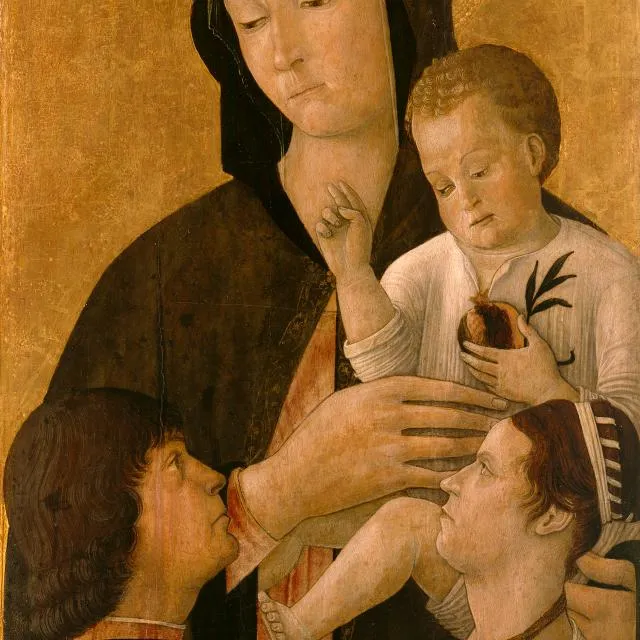
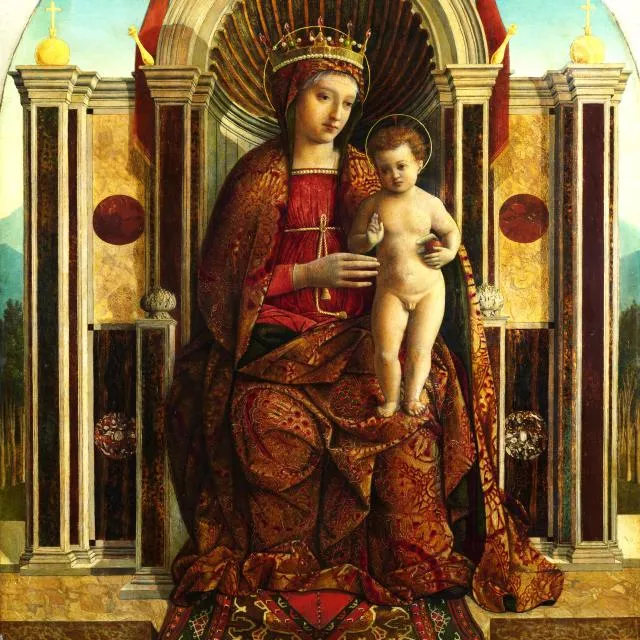
More by Gentile Bellini
Comments (0)
No comments yet. Be the first to share your thoughts.