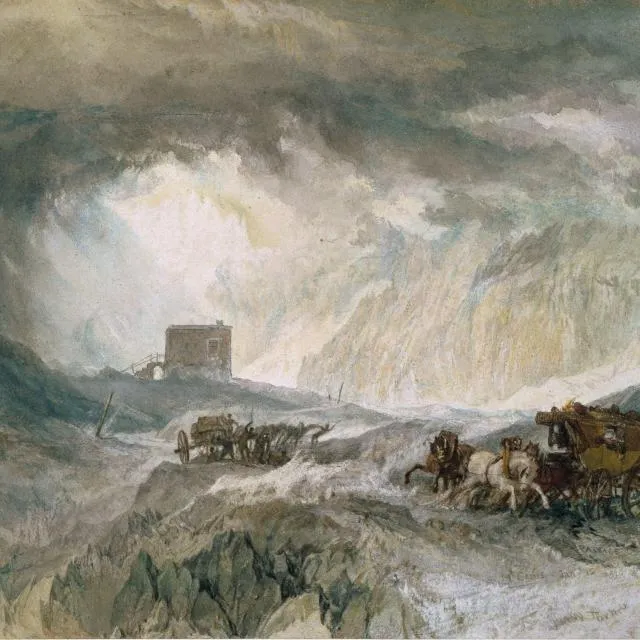
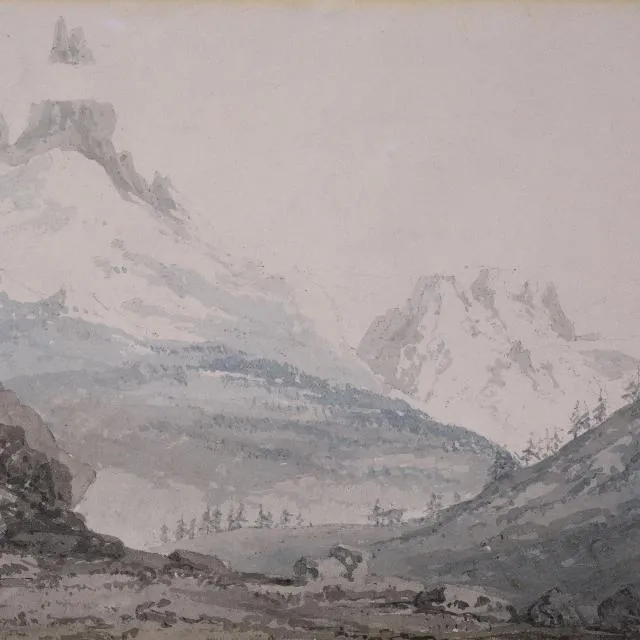
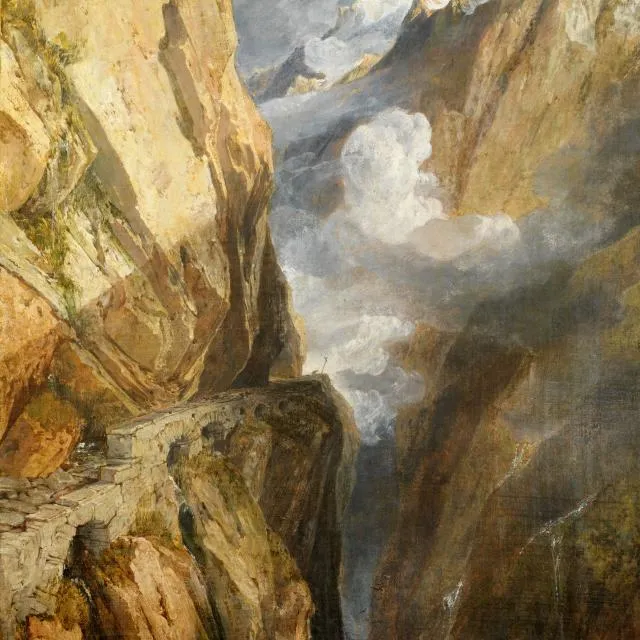
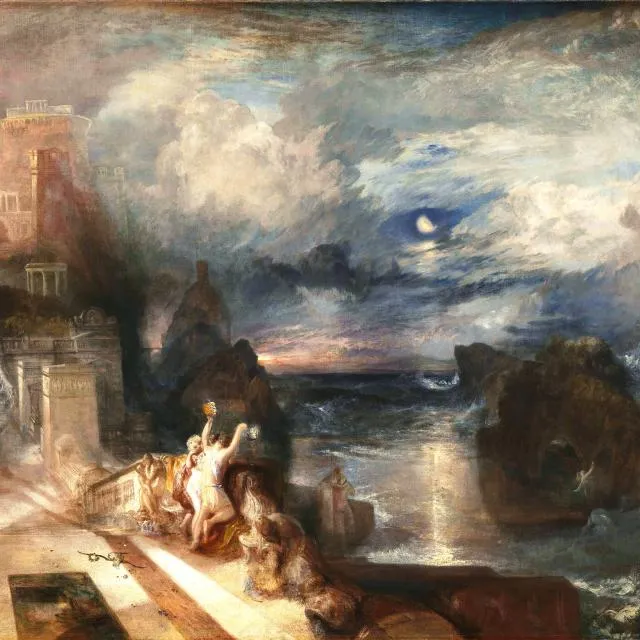
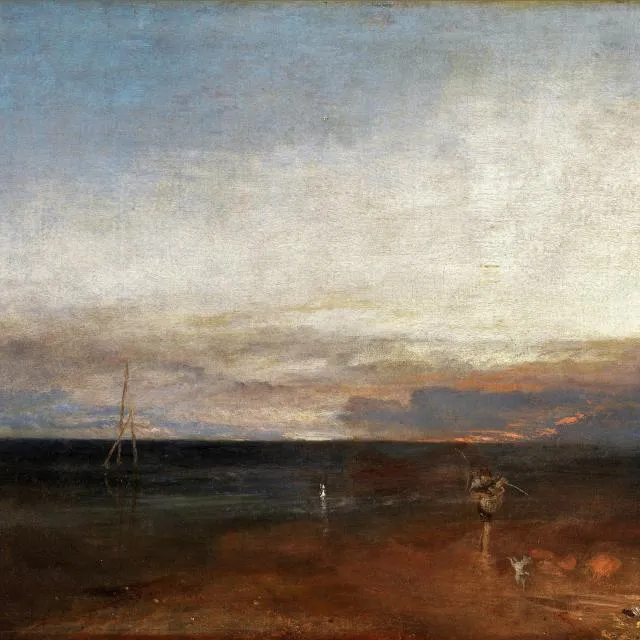
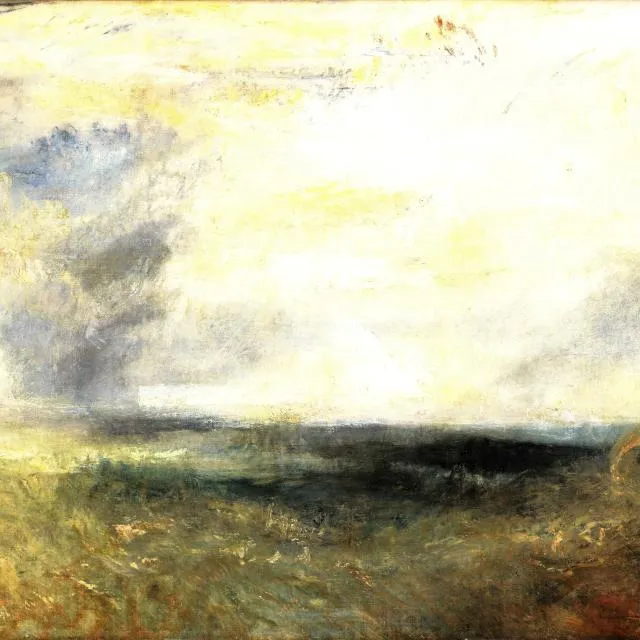
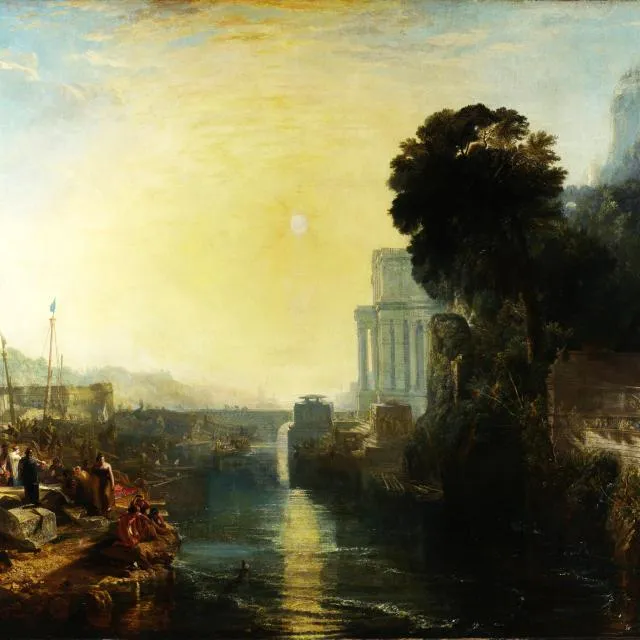
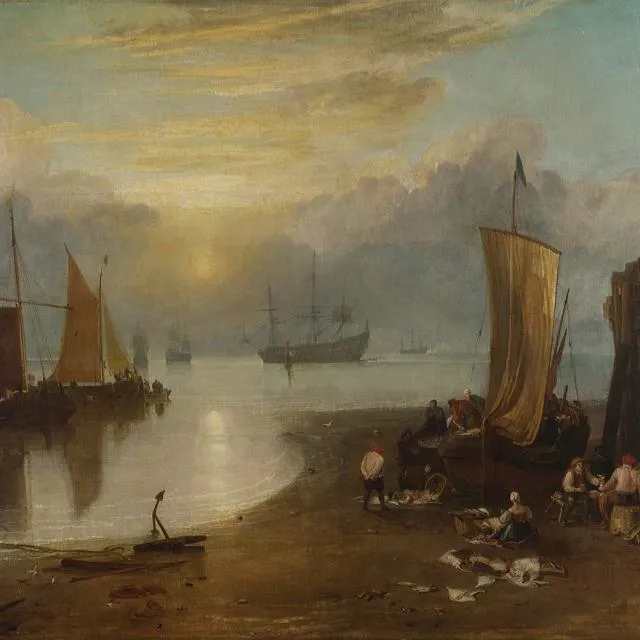
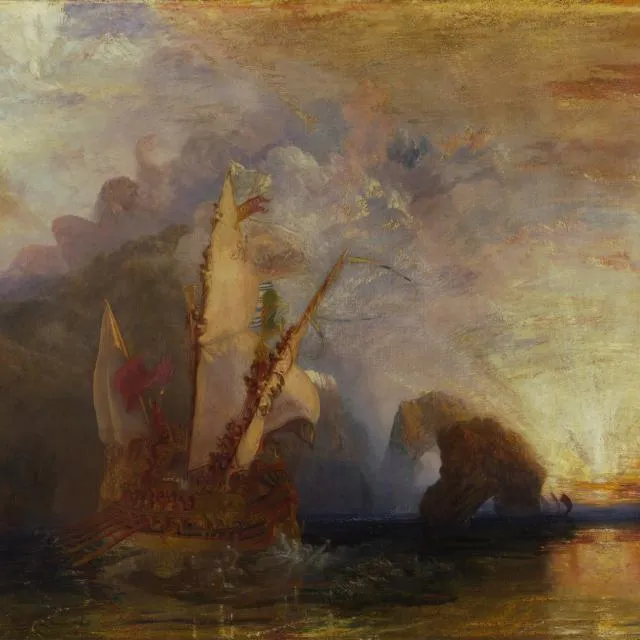
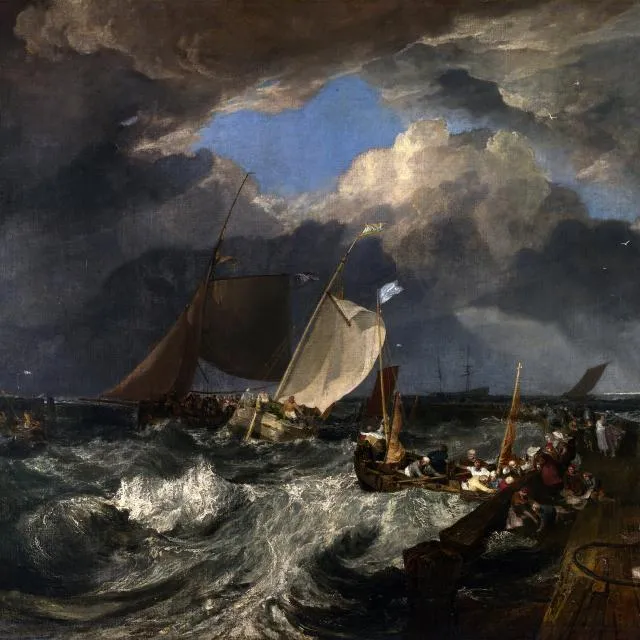
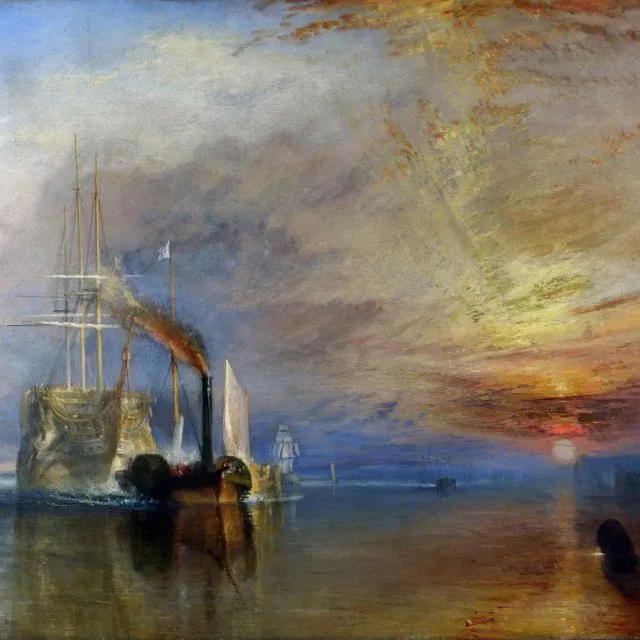
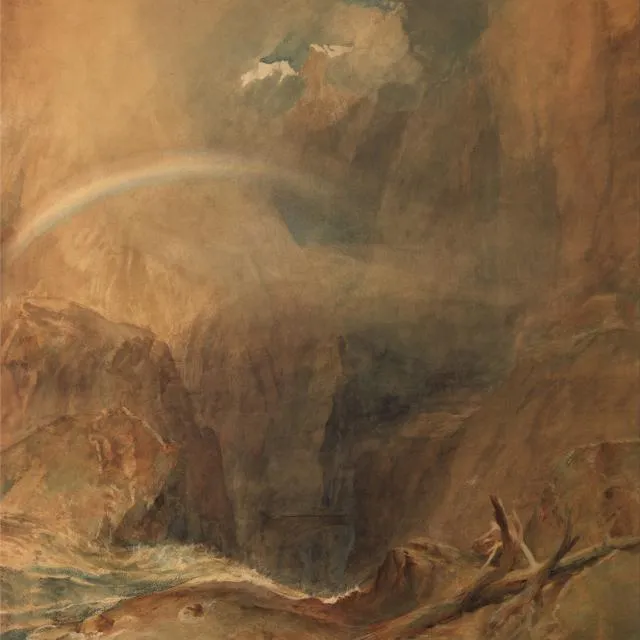
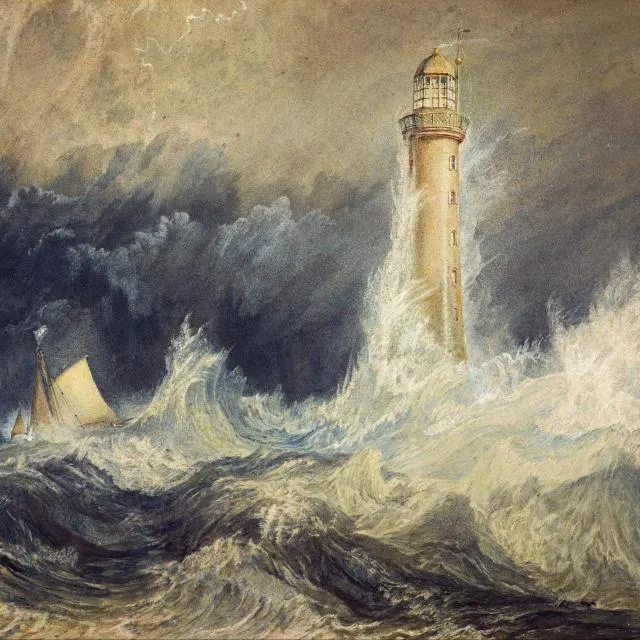
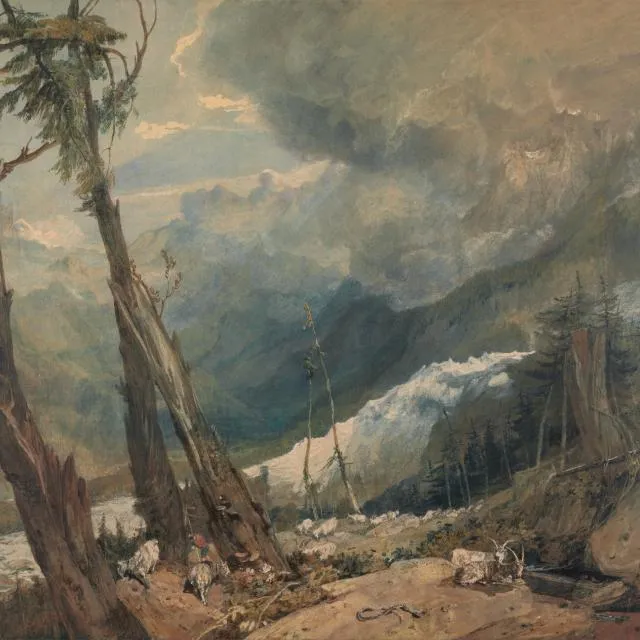
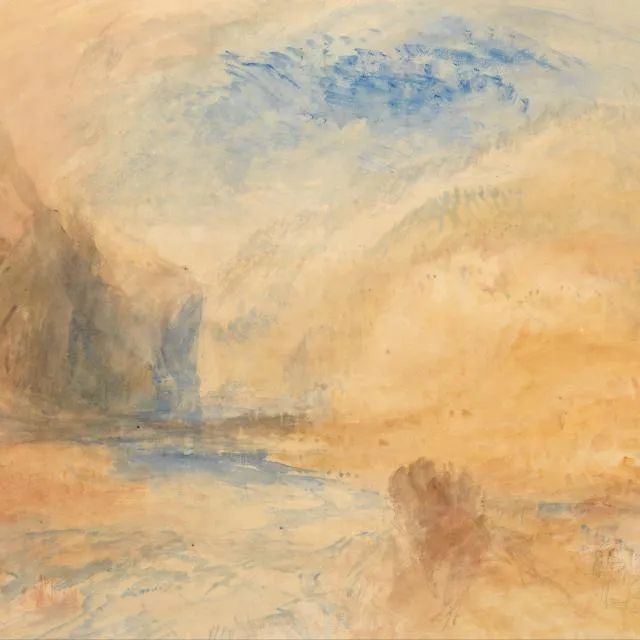
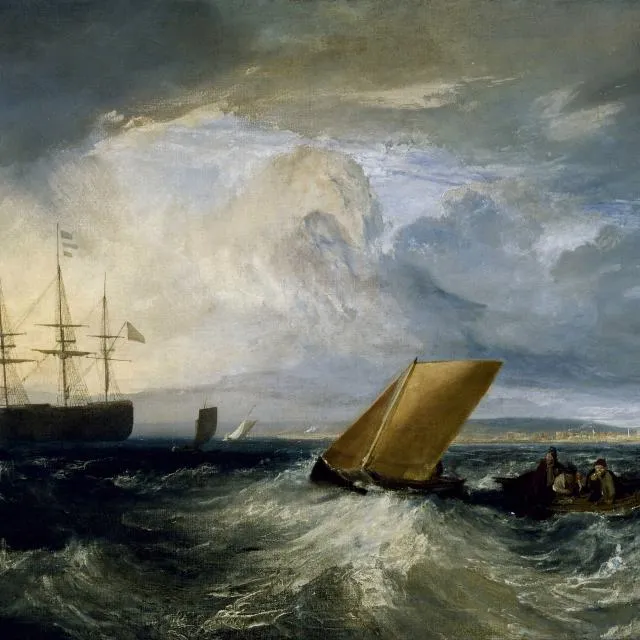
Joseph Mallord William Turner RA (23 April 1775 – 19 December 1851), known contemporarily as William Turner, was an English Romantic painter, printmaker and watercolourist. He is known for his expressive colourisations, imaginative landscapes and turbulent, often violent marine paintings.
Turner was born in Maiden Lane, Covent Garden, London, to a modest lower-middle-class family. He lived in London all his life, retaining his Cockney accent and assiduously avoiding the trappings of success and fame. A child prodigy, Turner studied at the Royal Academy of Arts from 1789, enrolling when he was 14, and exhibited his first work there at 15. During this period, he also served as an architectural draftsman. He earned a steady income from commissions and sales, which due to his troubled, contrary nature, were often begrudgingly accepted. He opened his own gallery in 1804 and became professor of perspective at the academy in 1807, where he lectured until 1828, although he was viewed as profoundly inarticulate. He traveled to Europe from 1802, typically returning with voluminous sketchbooks.
Intensely private, eccentric and reclusive, Turner was a controversial figure throughout his career. He did not marry, but fathered two daughters, Eveline and Georgiana, by his housekeeper Sarah Danby. He became more pessimistic and morose as he got older, especially after the death of his father, after which his outlook deteriorated, his gallery fell into disrepair and neglect, and his art intensified. In 1841 Turner rowed a boat into the Thames so he could not be counted as present at any property. He lived in squalor and poor health from 1845, and died in London in 1851 aged 76. Turner is buried in Saint Paul's Cathedral, London.
He left behind more than 550 oil paintings, 2,000 watercolours, and 30,000 works on paper. He had been championed by the leading English art critic John Ruskin from 1840, and is today regarded as having elevated landscape painting to an eminence rivalling history painting.
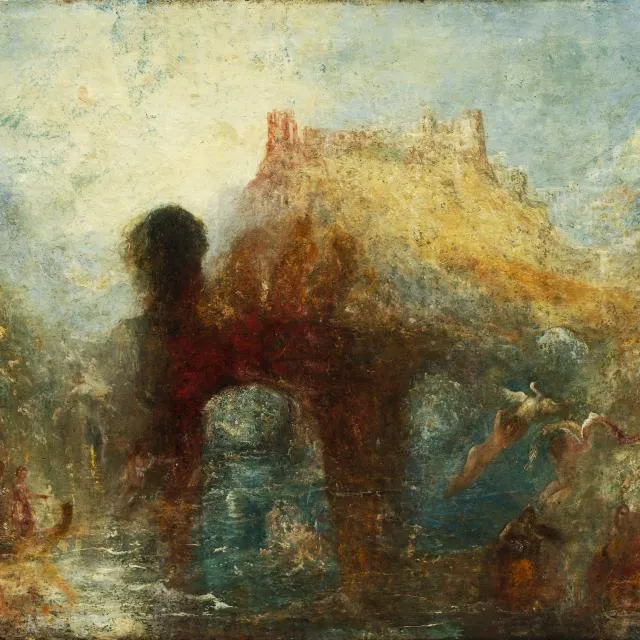
Turner's talent was recognised early in his life. Financial independence allowed Turner to innovate freely; his mature work is characterised by a chromatic palette and broadly applied atmospheric washes of paint. According to David Piper's The Illustrated History of Art, his later pictures were called "fantastic puzzles". Turner was recognised as an artistic genius: the influential English art critic John Ruskin described him as the artist who could most "stirringly and truthfully measure the moods of Nature".Turner's work drew criticism from contemporaries, in particular from Sir George Beaumont, a landscape painter and fellow member of the Royal Academy, who described his paintings as 'blots'.
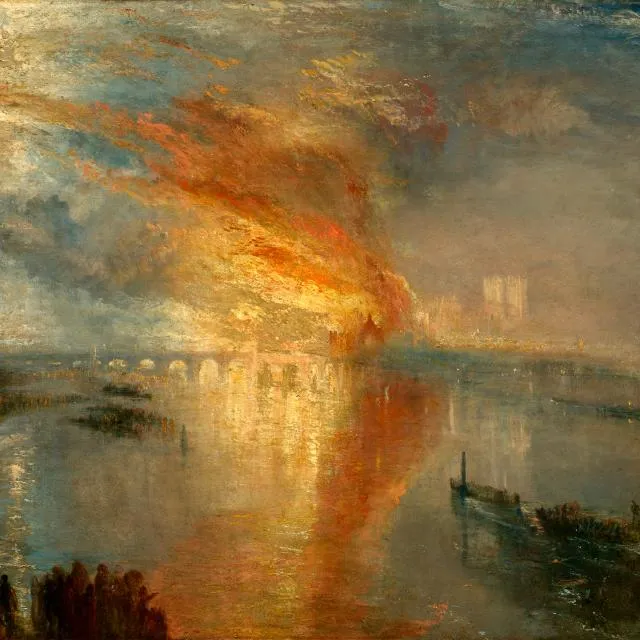
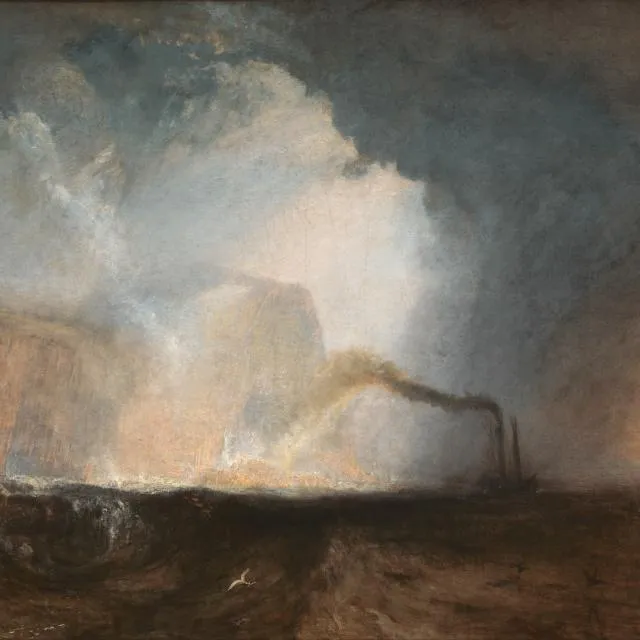
Turner's imagination was sparked by shipwrecks, fires (including the burning of Parliament in 1834, an event which Turner witnessed first-hand, and transcribed in a series of watercolour sketches), and natural phenomena such as sunlight, storm, rain, and fog. He was fascinated by the violent power of the sea, as seen in Dawn after the Wreck (1840) and The Slave Ship (1840).
Turner's major venture into printmaking was the Liber Studiorum (Book of Studies), seventy prints that he worked on from 1806 to 1819. The Liber Studiorum was an expression of his intentions for landscape art. The idea was loosely based on Claude Lorrain's Liber Veritatis (Book of Truth), where Lorrain had recorded his completed paintings; a series of print copies of these drawings, by then at Devonshire House, had been a huge publishing success. Turner's plates were meant to be widely disseminated, and categorised the genre into six types: Marine, Mountainous, Pastoral, Historical, Architectural, and Elevated or Epic Pastoral. His printmaking was a major part of his output, and a museum is devoted to it, the Turner Museum in Sarasota, Florida, founded in 1974 by Douglass Montrose-Graem to house his collection of Turner prints.
Turner's early works, such as Tintern Abbey (1795), stay true to the traditions of English landscape. In Hannibal Crossing the Alps (1812), an emphasis on the destructive power of nature has already come into play. His distinctive style of painting, in which he used watercolour technique with oil paints, created lightness, fluency, and ephemeral atmospheric effects.
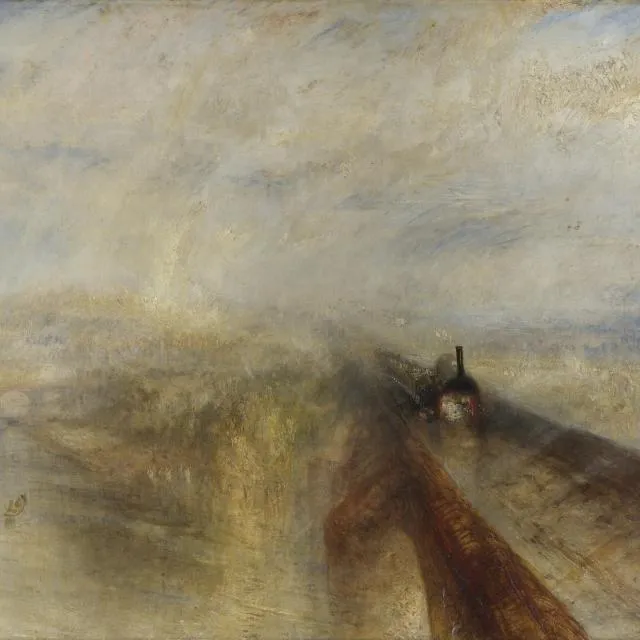
In Turner's later years he used oils ever more transparently and turned to an evocation of almost pure light by use of shimmering colour. A prime example of his mature style can be seen in Rain, Steam and Speed – The Great Western Railway, where the objects are barely recognisable. The intensity of hue and interest in evanescent light not only placed Turner's work in the vanguard of English painting but exerted an influence on art in France; the Impressionists, particularly Claude Monet, carefully studied his techniques.
High levels of volcanic ash (from the eruption of Mt. Tambora) in the atmosphere during 1816, the "Year Without a Summer", led to unusually spectacular sunsets during this period, and were an inspiration for some of Turner's work.
John Ruskin said that an early patron, Thomas Monro, Principal Physician of Bedlam, and a collector and amateur artist, was a significant influence on Turner's style:
His true master was Dr Monro; to the practical teaching of that first patron and the wise simplicity of method of watercolour study, in which he was disciplined by him and companioned by his friend Girtin, the healthy and constant development of the greater power is primarily to be attributed; the greatness of the power itself, it is impossible to over-estimate.
Together with a number of young artists, Turner was able, in Monro's London house, to copy works of the major topographical draughtsmen of his time and perfect his skills in drawing. But the curious atmospherical effects and illusions of John Robert Cozens's watercolours, some of which were present in Monro's house, went far further than the neat renderings of topography. The solemn grandeur of his Alpine views were an early revelation to the young Turner and showed him the true potential of the watercolour medium, conveying mood instead of information.